Search volume for most affiliate niches moves on a calendar, and so does buyer intent. When both drop at once, a site that depends on new visitors to generate new clicks can lose income faster than the traffic numbers alone would suggest. The problem isn’t just fewer people showing up. It’s that the people who do show up during a dip are often further from a purchase decision, which drags your conversion rate down at the exact moment you need it to hold steady.
This is predictable. Fitness niches slow after the New Year rush fades. Tax software peaks in March and goes quiet by June. Home and garden content dies in deep winter in most northern markets. If your niche has a season, it has a dip, and that dip has a date on the calendar. The question worth answering now, before the next one hits, is what you do with the months you already know are coming.
Why seasonal dips hit affiliate income harder than search traffic alone
A 30% drop in sessions does not produce a 30% drop in commissions. It usually produces something worse, because the traffic you lose first is often your highest-intent traffic. Someone searching “best running shoes for marathon training” in January is closer to buying than someone searching the same term in July. When the high-intent searchers disappear, your conversion rate drops along with your traffic, and the two effects stack.
Commission structure makes this worse in a lot of niches. If your top earner is a product with a tight buying window, like tax software or holiday gear, the affiliate program itself may throttle or pause promotions outside that window, cutting your best EPC source to zero regardless of what your traffic does. If you haven’t looked at how your earnings per click behave across the year, that’s worth checking before you plan anything else. The piece on raising your EPC without chasing more traffic covers how to diagnose which part of the funnel is actually losing you money when conversion rates slip.
Mapping your niche’s seasonal calendar before the dip hits
Before you can build around a dip, you need to know exactly when it happens and how long it lasts. Pull twelve to twenty-four months of data from Google Search Console and your analytics platform, and plot sessions and conversions by month, not just by week. Most seasonal patterns are clearer over a full year than they are in any single quarter.
Layer your affiliate network’s commission data on top of that traffic chart. You’re looking for the gap between when search interest drops and when commissions drop, because that gap is usually a few weeks wide and it tells you how much runway you actually have to react.
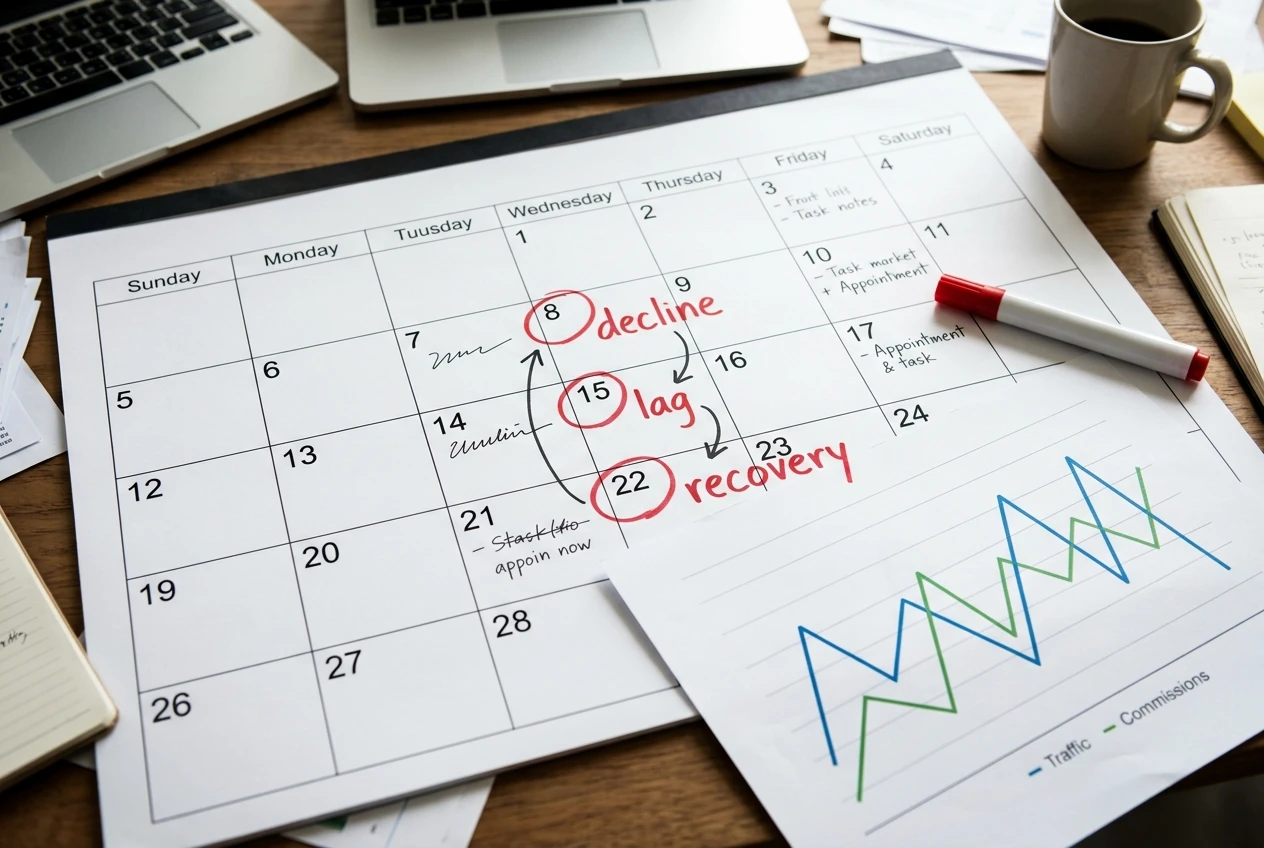
Once you have both lines on one chart, mark three dates for each dip:
- The week traffic visibly starts declining
- The week conversions drop, which may lag traffic by two to four weeks
- The week both recover
Do this for your three or four highest-earning categories, not the whole site. A site covering multiple sub-niches often has dips that don’t line up, which means one category can carry the site while another is slow, if you’ve planned for it.
Building counter-seasonal offers into your content plan
Once you know when your main offers go quiet, the next step is finding what sells instead during that window. This isn’t about publishing filler content to keep the site “active.” It’s about identifying a second set of offers, in the same niche or an adjacent one, that peak when your primary offers don’t.

A fitness site that leans hard into New Year resolution content can build a secondary push around summer event training, back-to-school family fitness routines, or holiday gift guides for fitness gear in November. None of those carry the same volume as January, but they don’t need to. They need to cover the gap.
The planning work happens months ahead of the dip, not during it. Content needs time to get indexed and to start ranking, so a counter-seasonal push aimed at a June dip should go live in February or March. Build this into an actual calendar with publish dates attached to each offer, the same way you’d plan a launch. Treat the slow season as a second peak you’re building toward, not a trough you’re trying to survive.
Turning your email list into income that doesn’t depend on search traffic
An email list is the one channel that keeps earning when search traffic drops, because the people on it already found you once and chose to stay in touch. If you’re building income around a seasonal niche, your list is the asset that smooths the curve.

During the lead-up to a known dip, shift your email sequences toward evergreen or counter-seasonal offers rather than whatever’s ranking that week. A welcome sequence or nurture series doesn’t care what Google is doing, and a list of a few thousand engaged subscribers can produce commissions on a Tuesday in the dead of your slow season just as easily as during peak traffic.
If your list is thin or your opt-in rate is low, that’s worth fixing before the next dip rather than during it. The article on why affiliate income depends on traffic you don’t own walks through why this channel matters more than most new affiliates realize, and it’s a good starting point if list building hasn’t been a priority yet.
Repurposing your best-converting content for the off season
You don’t need brand-new content for every counter-seasonal push. Look at what already converts well during peak season and ask what version of it would make sense in the off-season.
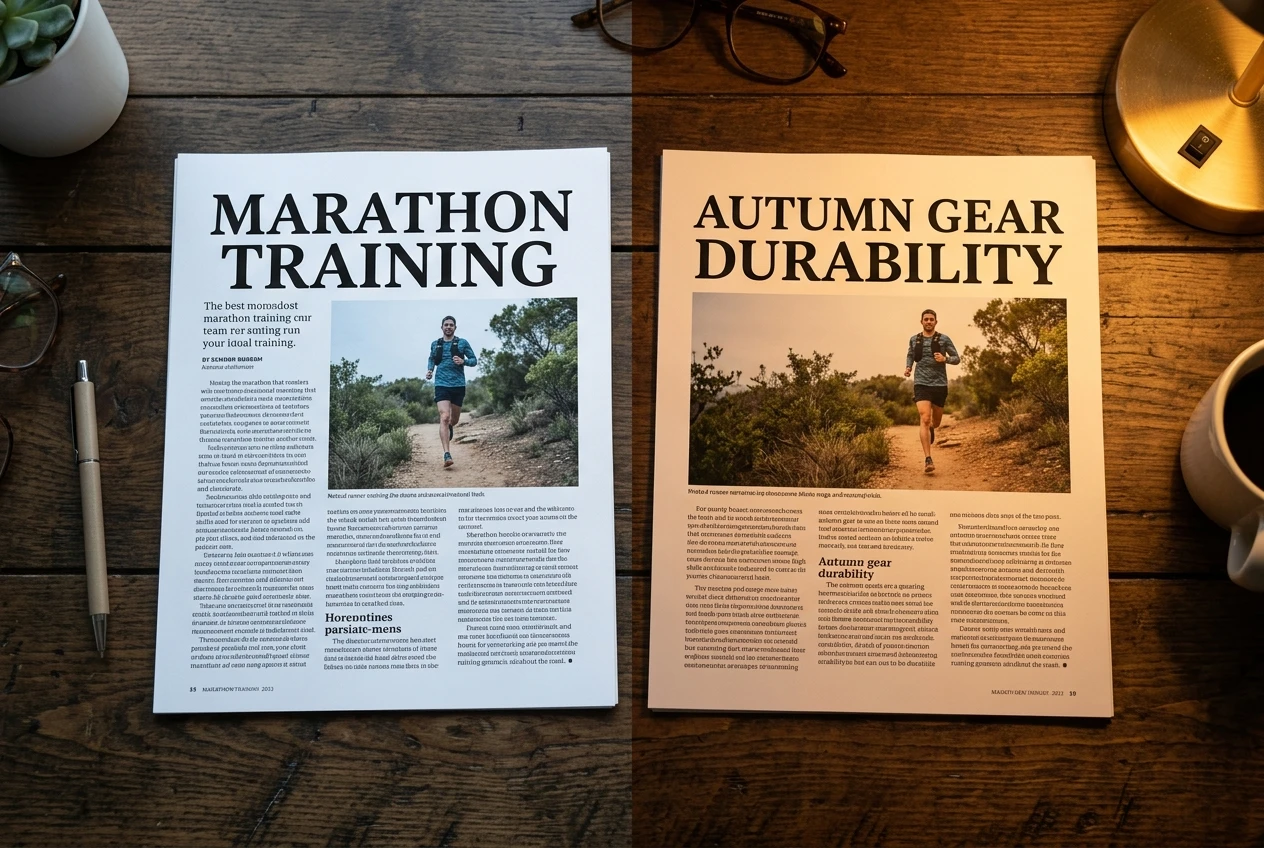
A comparison post that performs in January can often be reframed for a different buying trigger later in the year. A “best gear for marathon training” post can become a “gear that held up through a full year of use” post in the fall, pulling in a different search intent with content you’ve already written and already know converts.
This also applies to email content. A sequence that sold well during peak season can be rewritten with a different subject line and a different angle, then sent to a segment of your list that didn’t buy the first time. You’re not creating more work, you’re stretching proven material across more of the calendar.
Letting your funnel keep selling while traffic sleeps
A funnel that only works when you’re actively driving traffic to it isn’t really a funnel, it’s a campaign. The difference matters most during a seasonal dip, because that’s when you have the least time and the least incentive to manually push new content out.

Automated email sequences, scheduled promotions tied to your counter-seasonal calendar, and landing pages that don’t need a fresh traffic source to convert are what let income keep moving while you’re focused elsewhere, or while search volume is simply down across the board. The goal is a setup where a subscriber who joins in July gets routed into the same kind of nurture sequence and offer logic as one who joins in January, adjusted for whatever’s actually relevant that month.
Deciding which offers are worth protecting when the numbers drop
Not every offer deserves the same attention during a slow season. When traffic and conversions both fall, it’s tempting to spread effort evenly across everything on the site, but that usually means nothing gets enough attention to actually move.
Rank your offers by three things: commission value, how well they convert outside peak season, and how much manual upkeep they require. An offer with a high commission but zero off-season conversion history isn’t worth protecting right now, it’s worth testing later. An offer with a modest commission but steady year-round demand is often the one to build your off-season calendar around, because it’s the one your readers actually buy when they’re not in a seasonal rush.
Cut or pause content updates on offers that only perform during their peak window, and redirect that time toward the counter-seasonal pieces and email sequences that need to be live before the next dip arrives. The goal isn’t to do more work during the slow months. It’s to make sure the right offers are already in place so the work you did months ago keeps paying off now.
Once your seasonal calendar is mapped, work through the funnel automation guide to put the slow-season selling on autopilot before the next dip hits.