
Most beginners researching high-ticket affiliate programs start with the same spreadsheet: commission amount, cookie length, minimum payout, application difficulty. Those numbers matter, and if you want a breakdown of which networks actually check what before they approve you, the high-ticket networks comparison already covers that ground. This article starts somewhere else. It looks at what happens after you get approved, because that’s where a lot of beginners quietly stall out.
A $500 commission on a software deal or a $2,000 payout on a coaching program looks the same on a spreadsheet whether the company behind it answers your emails or not. The number tells you what you’d earn if you make a sale. It tells you nothing about whether anyone will help you get there.
Why a big commission doesn’t mean a beginner-friendly program
A high payout is often a sign the product is complex, expensive, or slow to sell, not a sign the company has built anything to help a new affiliate succeed with it. Some of the biggest commission tiers exist because the sales cycle is long and the offer needs serious positioning to convert. That’s exactly the situation where a beginner needs real guidance, not an approval email and silence.
Programs that genuinely want beginners to succeed tend to build infrastructure around that goal: training material, swipe copy, a point of contact who answers specific questions. Programs that just want affiliate volume on the books tend to approve almost anyone and let the dashboard do the rest. Both can pay the same commission. Only one of them is going to help you actually earn it.
The gap between those two shows up after approval, which is why it rarely gets caught by a roundup that only looks at the application page.
The support structures worth checking for before you apply
Before you spend an afternoon filling out an application, there are a few things worth checking for on the affiliate page or in the program’s public materials.

- An onboarding call or structured welcome sequence. Not a single auto-reply, but something that walks a new affiliate through the offer, the audience it converts for, and what to avoid.
- A swipe file or asset library with actual email copy, banner creative, and product positioning you can adapt, not just a logo pack.
- A named affiliate manager, with a real name attached, not a shared support inbox.
- Public case studies or affiliate interviews that describe what worked, rather than just a testimonial wall with first names and no detail.
- A Slack channel, community, or regular update where affiliates can ask questions and see other people getting answers.
None of these guarantee a program will perform for you. But their presence tells you the company has thought about what a new affiliate needs between approval and a first sale, and that’s the gap most beginners fall into.
Red flags that look like support but aren’t
Some programs dress up the absence of support as the presence of it, and the difference is worth learning to spot early.
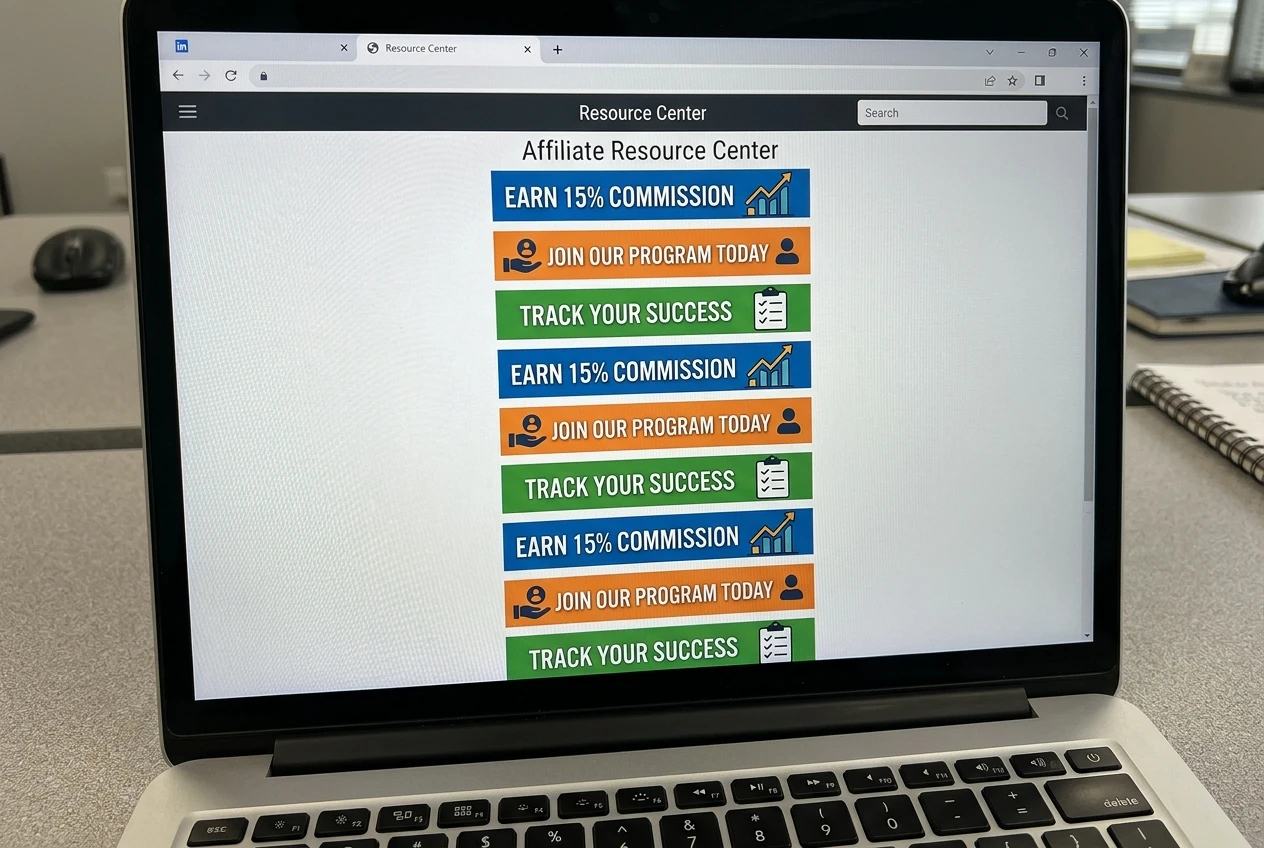
A glossy “affiliate resource center” that’s really just the same three banner images resized is not a swipe file. A welcome email that says “reach out anytime” with no name attached and no response when you actually do reach out is not an affiliate manager. A Facebook group with five thousand members and no visible staff replies is not a community, it’s a holding pen.
Watch for application processes that approve you within minutes regardless of what you wrote about your traffic or your plan. That speed can mean the program is confident in its onboarding. It can also mean nobody is actually reading applications, which usually means nobody is going to read your questions either.
The biggest tell is a program that talks about “high-touch support” or “dedicated partner success” on its sales page but gives you no way to test that claim before you commit. If the only proof of support is the word support, treat it as a claim you haven’t verified yet, not a fact about the program.
Three questions to ask an affiliate manager before you commit time
Most high-ticket programs give you some way to contact an affiliate manager before or during the application, even if it’s just an email address. Use it. The answers, or the lack of them, tell you more than the FAQ page ever will.
- “What does onboarding look like for someone with no audience yet?” A real manager will describe a process. A weak one will send you back to the general FAQ.
- “Can I see an example of the swipe copy or creative assets affiliates get?” If they can attach a file or link to one in the reply, the resources are real. If they describe them in vague terms, they may not exist yet.
- “Who do I talk to if a tracking link breaks or a sale doesn’t show up correctly?” This question tests whether there’s an actual person responsible for affiliate problems, or whether you’ll be routed to a general support ticket queue alongside customers.
How fast they answer matters less than what the answer contains. A short, specific reply from a real person beats a long, warm-sounding reply that says nothing concrete.
How to test a program’s support without risking your whole month
You don’t need to commit your entire content calendar to find out whether a program’s support is real. Before you build a review, a comparison page, or a funnel around a high-ticket offer, there’s a cheaper way to test the relationship.
Send the affiliate manager one specific, slightly technical question before you’ve built anything, something like how commissions are attributed on a multi-touch sale, or whether there’s a cap on recurring payouts. Time how long it takes to get an answer, and notice whether the answer actually addresses what you asked.
Then ask for one asset: a swipe email, a comparison chart, a product walkthrough video you can embed. A program that hands this over within a day or two is one that’s set up to support affiliates at scale. A program that stalls on a single file request is telling you what the next six months will probably feel like.
This whole test can take under a week, and it costs you nothing but a couple of emails. That’s a much smaller bet than writing five thousand words of content around a program that goes quiet the moment you need help.
What to do if you get approved and then go quiet with no response

If you’re already in a program and the silence has set in, you still have options before you write the time off entirely.
Give one more direct, specific outreach a real shot. Skip “just checking in” and ask for something concrete, like the current swipe file or a status check on a specific sale. A program with a working affiliate manager will usually respond to a specific ask faster than a general one.
If that goes nowhere within a reasonable window, shift your attention rather than your whole strategy. Keep the program in rotation if the commission still makes sense, but stop building new content specifically for it. Put your next piece of content behind an offer where you’ve already confirmed someone answers.
This is also a good moment to look at your own funnel rather than only the program’s responsiveness. If your traffic, your landing page, or your email list isn’t converting the way you’d expect, that’s worth checking separately from whether the affiliate manager writes back. The landing page elements that actually move opt-in rate are worth a look if conversions feel low regardless of which program you’re promoting.
Going quiet after approval is common enough that it shouldn’t be a surprise. What matters is building a short list of programs where it doesn’t happen, and not spending your limited content time finding that out the hard way, program by program.
If you’d rather not run this test yourself on every program that looks promising, subscribe for the running, updated list of high-ticket programs tested specifically for real beginner support, the ones with affiliate managers who actually answer and resources that actually exist.